First time visiting Ireland? What Americans worry about before they go
I’ve driven hundreds of American visitors around the south west of Ireland. Kerry, Cork, Dingle, Beara, West Cork. When you spend full days together in a car, people talk properly.
And once guests relax, they tell me what they were genuinely worried about before they came.
Not dramatic fears. Just the real questions that sit in the back of your mind when you’re spending serious money on a trip you’ve dreamed about for years.
So I wrote this for anyone planning their first visit. I’m going to be straight with you, but I’m also going to leave you reassured and properly prepared.
1) “Is Ireland actually safe?”
Yes. For visitors, Ireland is generally very safe. The U.S. State Department rates Ireland Level 1: Exercise Normal Precautions, which is the lowest advisory level. (Travel.state.gov)
What that looks like in real life:
- In Dublin city centre, think “normal city awareness.” Watch your phone in crowded areas, especially tourist hotspots, busy public transport, and late-night taxi queues.
- In Cork, Kerry and most of the south west, visitors usually feel the opposite of anxious. It feels calmer and slower, and people tend to look out for each other.
The most common issue tourists run into is petty theft or a lost phone, not serious crime. Basic habits solve most of that.
Useful resources
- Ireland travel advisory (U.S. Dept of State)
- Ireland country information page (U.S. Dept of State)
- Getting help in Ireland (UK FCDO)
- Is Ireland safe? (AXA travel guide)
2) “Can I really drive on the left?”
Most Americans can, and most adjust faster than they expect.
What catches people is not the left side. It’s the roads:
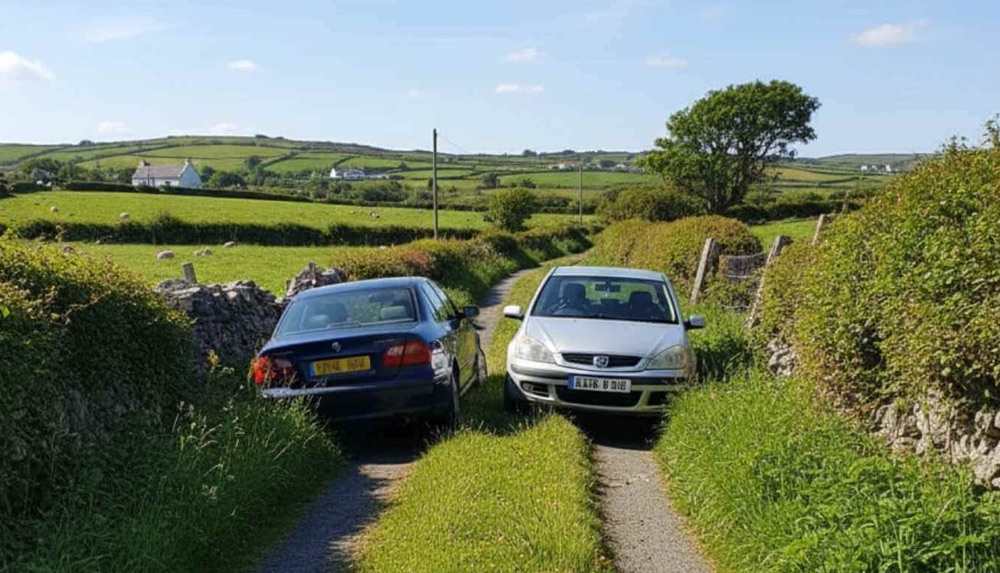
- Rural roads can be narrow, with hedges and stone walls close in.
- You will meet tractors, cyclists, and tour buses.
- You need to drive slower than your instincts tell you on day one.
My best tip: don’t make your first drive a long one. If you land after an overnight flight, do something easy that first afternoon. Short drive, early dinner, early night. You’ll be a much better driver on day two.
Useful resources
- Driving in Ireland (Ireland.com official guide)
- Tolling information (Transport Infrastructure Ireland)
- Toll locations and charges (rates from Jan 1, 2025)
- M50 toll operator (eFlow)
3) “What if driving stresses me out and we spend the trip tense?”
This is one of the most common worries people admit to once they’re here.
A simple test: do you enjoy driving in unfamiliar places at home? If you don’t, adding jet lag, narrow roads and different rules can turn your holiday into a job.
If you want the holiday feeling, not the “are we on the right road?” feeling:
- Base yourself in fewer places.
- Keep drive days short.
- Avoid night driving on rural roads your first time.
- Consider letting someone else do the driving, even for the longer days.
Useful resources
- Driving in Ireland (laws, tolls, fuel, speed limits, parking)
- Your ultimate Ireland guide (practical planning)
- TII Pay a toll (how payments work)
- Tolling contact information (operators and support)
4) “Is the weather going to ruin it?”
Ireland’s weather is changeable. That’s true. But it rarely ruins a trip if you plan like a grown-up about it.
The secret is not waiting for a “perfect forecast.” It’s dressing for the day:
- Waterproof jacket you trust.
- Shoes you can walk in on wet ground.
- Layers so you can adjust.
Also, the weather often creates the magic. Mist lifting off the hills. Sun breaking through after rain. That’s Ireland at its best.
Useful resources
- Met Éireann national forecast
- Met Éireann forecasts hub
- Ireland.com emergency contacts (good to bookmark)
- Ireland.com practical guide
5) “What should I pack so I’m comfortable?”
Here’s the honest packing list that works for most people:
- 1 proper waterproof jacket (not a “cute” raincoat)
- 2 pairs of walking shoes (so one can dry)
- Layers (t-shirts, a warm mid-layer, something light for evenings)
- A small day bag for water, snacks, spare layer
- A plug adapter and a portable charger
Most Americans overpack. And many Irish hotels, especially the charming ones, have stairs, tighter rooms, and smaller lifts. Packing lighter makes everything easier.
Useful resources
- Your ultimate Ireland guide (practical prep)
- Met Éireann forecasts
- Lonely Planet, Ireland practical information
- Rick Steves packing light tips
6) “Will jet lag waste the first two days?”
Jet lag is real, but it doesn’t have to steal your trip.
What works best:
- Get daylight as soon as you arrive.
- Have a proper breakfast or lunch.
- Keep moving gently (walk, coffee, light sightseeing).
- Avoid a long afternoon nap.
- Aim for a normal bedtime on Irish time.
Most people feel noticeably better on day two.
Useful resources
- Ireland country info (U.S. Dept of State, includes practical travel pointers)
- CDC traveller info for Ireland
- Your ultimate Ireland guide
- Ireland.com official travel planning hub
7) “Will I understand the accents?”
Yes. But you might need a day or two for your ear to tune in, especially in rural areas.
My advice is simple: don’t pretend you heard someone. Just say, “Sorry, could you say that again?” Irish people won’t be offended.
Also, if you’re in a busy pub and it’s loud, it’s the noise, not the accent.
Useful resources
- Your ultimate Ireland guide (culture and practical tips)
- Lonely Planet Ireland overview
- Rick Steves Ireland travel tips
8) “Is Ireland expensive? Am I going to get stung?”
Ireland can feel pricey, especially in peak season, but it’s not a “hidden fees” destination.
A useful benchmark from Tourism Ireland: on average, American tourists spend €162 per night and stay 8.6 nights on the island of Ireland. (Island Of Ireland)
What I tell guests:
- Decide what matters most (comfort hotels, great food, private touring, or experiences).
- Spend properly on the things you’ll remember.
- Simplify everywhere else.
Also, tip culture is calmer than the U.S. In restaurants, 10–15% for good service is fine.
Useful resources
- Tourism Ireland: United States market (spend and length of stay)
- CSO Inbound Tourism Dec 2025 (average stay 7.5 nights in 2025)
- Lonely Planet: money and costs in Ireland
- Ireland.com: money in Ireland
9) “Do I need cash?”
Very little.
Cards and contactless are the norm across Ireland now. I still recommend carrying a small amount of euro for peace of mind, but most visitors use cards for the entire trip.
If you’re crossing into Northern Ireland, remember it uses pound sterling.
Useful resources
- Ireland.com: money in Ireland
- Central Bank of Ireland: euro notes and coins
- Rick Steves: money in Ireland
- Lonely Planet: money and costs
10) “What about my phone and data?”
Most visitors either have roaming or use an eSIM.
Coverage is strong in towns and cities. In very remote stretches of the coast and mountains, you can get dips. That’s normal.
Two simple fixes:
- Download offline maps.
- Screenshot your key booking details (hotel address, confirmations).
You can also check predicted coverage for your destinations using ComReg.
Useful resources
- ComReg coverage map
- ComReg: check mobile coverage at your location
- Lonely Planet: using your phone in Europe
- The Points Guy: using your phone internationally
11) “Will I get lost?”
You probably will at least once. Briefly.
Ireland’s rural roads don’t behave like American highways. Some signs are small. Some roads twist. Sometimes Google Maps suggests a lane you wouldn’t choose yourself.
The real antidote is time. If you’ve planned a day with no margin, a wrong turn feels like stress. If you’ve planned breathing room, it becomes part of the story.
Useful resources
- Driving in Ireland (Ireland.com)
- Ireland.com: your ultimate Ireland guide
- TII: tolling information
- Ireland.com: emergency contacts
12) “Will people judge me for being American?”
No. You’re welcome here.
And you’re not unusual here either. Tourism Ireland’s U.S. market notes that U.S. visitors tend to stay longer and tour extensively around the regions. (Island Of Ireland)
What matters is how you travel:
- Be polite.
- Be curious.
- Keep your volume down in small pubs.
That’s it.
Useful resources
- Tourism Ireland: United States market
- Ireland.com official travel guide
- National Geographic: Ireland destination guide
- Lonely Planet: Ireland
13) “What if I don’t know the pub and restaurant rules?”
This is easier than people fear.
In most pubs:
- You order at the bar.
- You usually pay as you go.
- If it’s busy, a smile and patience goes a long way.
Tipping:
- Restaurants: 10–15% for good service is plenty.
- Pubs: tipping is not expected in the same way.
Useful resources
- Ireland.com: your ultimate Ireland guide
- Lonely Planet: practical information (etiquette basics)
- Rick Steves: Ireland travel tips
- Ireland.com: money in Ireland (useful for tipping context)
14) “How do I avoid tourist traps?”
Here’s the truth: don’t obsess about avoiding “touristy” things.
The famous places are famous because they’re genuinely beautiful. The difference is how you do them:
- Start earlier than the crowds.
- Avoid trying to do everything in one day.
- Build in time for unplanned stops.
The south west rewards slow travel. One good day on Dingle, done properly, beats three rushed days chasing checklists.
Useful resources
- Ireland.com: driving in Ireland (pacing and practicalities)
- Ireland.com: your ultimate Ireland guide
- Lonely Planet: Ireland itineraries
- Rick Steves: Ireland itinerary
15) “Is my itinerary too ambitious?”
If you’re asking the question, it probably is.
Distances look short on a map, but rural driving takes time. And official stats show the average length of stay for foreign visitors in 2025 was 7.5 nights. (cso.ie)
My rule of thumb:
- Choose one region (like the south west) and do it well.
- Or choose two, but keep the transfer days light.
You want a holiday where you remember places, not a holiday where you remember car parks.
Useful resources
- CSO: Inbound Tourism December 2025 (average stay)
- Ireland.com: driving in Ireland
- Lonely Planet: Ireland itineraries
- Rick Steves: Ireland itinerary
16) “What if something goes wrong?”
This is a sensible worry. Travel always has unknowns.
In the Republic of Ireland, the emergency numbers are 112 or 999. Ireland.com lists the same emergency numbers and explains what to expect when you call. (Ireland.com)
If you want extra reassurance:
- Travel insurance is worth it.
- Keep key numbers saved.
- Keep a screenshot of your hotel info.
Most problems on trips are small. A delayed flight. A lost bag. A twisted ankle. Planning for them takes the fear out of them.
Useful resources
- Ireland.com: emergency contacts (112/999)
- Gov.ie: how to contact emergency services in Ireland
- HSE: when to call 112 or 999
- U.S. Embassy Dublin
17) “What are hotels and B&Bs really like?”
This is where expectations can be a little off if you’re used to big U.S. chains.
In Ireland:
- Rooms can be smaller.
- Older buildings can mean stairs and quirky layouts.
- Air conditioning is not universal.
But the trade-off is charm and personal hospitality. A good Irish B&B can feel like being looked after, not just “checked in.”
My advice is to read the details before you book. Look for parking notes, stairs, lift access, and whether the room has a walk-in shower if that matters.
Useful resources
- Ireland.com: places to stay
- Ireland.com: your ultimate Ireland guide
- Lonely Planet: Ireland hotels
- National Geographic: Ireland destination guide
18) “Is the food actually good?”
Yes. And this is one of the biggest pleasant surprises for American visitors.
The south west is brilliant for food because you have:
- Seafood on the coast.
- Great beef and dairy inland.
- Strong local producers.
My practical tip: don’t only eat in “big name” places. Some of the best meals are in small towns where the chef is quietly excellent.
Also, dietary requirements are generally handled well. Just mention it when booking.
Useful resources
- Ireland.com: food and drink in Ireland
- Lonely Planet: food in Ireland
- National Geographic: Ireland
- Ireland.com: County Cork guide
19) “What if I get sick or need medication?”
This is a very normal concern, especially for anyone travelling with prescriptions.
The basics:
- Bring enough medication for the full trip plus a little extra.
- Keep it in your carry-on, not your checked bag.
- Bring a copy of your prescription or a doctor’s note if you want extra peace of mind.
For emergencies, call 112 or 999. The HSE has clear guidance on when to call. (HSE.ie)
Useful resources
- HSE: when to call 112 or 999
- Gov.ie: emergency services contact
- CDC: traveller info for Ireland
- U.S. Embassy Dublin
20) “What if it doesn’t live up to the photos?”
This is the one nobody admits, but everybody feels.
Sometimes mist rolls in. Sometimes the “perfect view” hides for an hour. That’s Ireland.
But Ireland is not one viewpoint. It’s the small moments. The unexpected stop. The chat with a stranger. The music you didn’t plan to hear.
If you come with a bit of flexibility, Ireland nearly always delivers something better than the photo you had in your head.
Useful resources
- Met Éireann forecasts
- Ireland.com official travel guide
- Ireland.com: your ultimate Ireland guide
- Tourism Ireland: United States market overview
If you take nothing else from this, take this.
Almost every worry fades within the first day or two. Once you’re here, breathing Atlantic air and settling into the rhythm of the place, Ireland feels straightforward.
And if you’d rather talk through your plans with someone who’s spent a lifetime on these roads, I’m always happy to have that conversation. No pressure. Just experience, and a calm answer when you need one.